
Business Overview
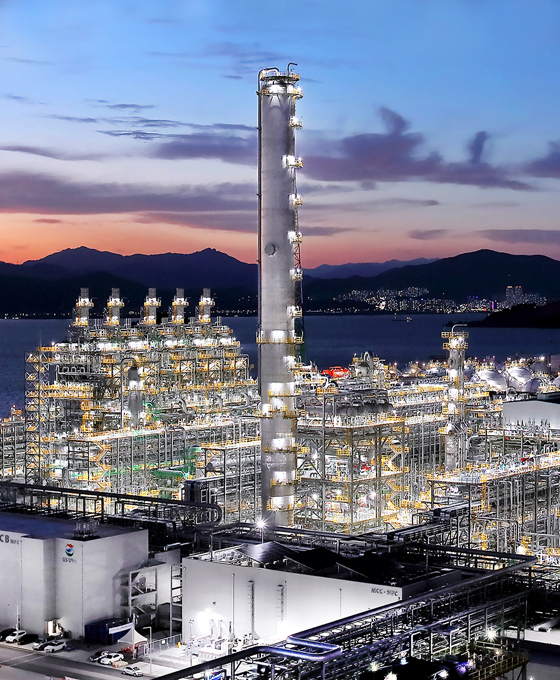
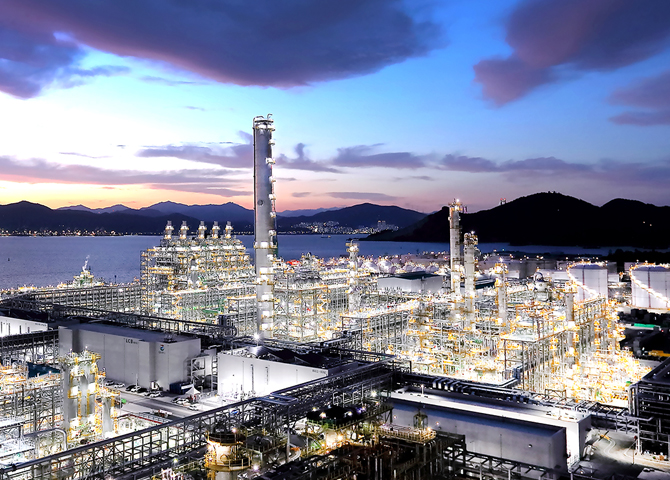
Olefin Business Overview
GS Caltex established its MFC based on the NCC process, which produces basic petrochemicals such as ethylene and propylene from naphtha. By using low-value refinery byproducts such as ethane and LPG as feedstock, the facility enables their conversion to high-value petrochemical products, with an annual ethylene production capacity of 900,000 tons.
Looking ahead, we aim to drive balanced growth through vertical integration across related industries, from feedstock supply to end demand, while expanding production facilities to achieve economies of scale. Through entry into the olefin business, we will further strengthen our position as a world-class company in both refining and petrochemicals.
Production Capacity (tons per year)
- Feedstock
-
Naphtha: up to 2,200,000,
LPG (C3/C4): up to 180,000,
FCC off-gas: up to 320,000 - Products
-
Ethylene: 900,000,
Propylene: 470,000,
Mixed C4: 300,000, Pygas: 450,000
Strengths of the MFC Process
GS Caltex’s MFC builds on the NCC process, which produces basic petrochemicals such as olefins and BTX from naphtha derived during existing refining operations.
It is a highly advanced upgrading process that uses low-value refinery byproducts, such as ethane and LPG, as feedstock for the production of high-value petrochemicals.
By enabling the simultaneous conversion of liquid naphtha and gaseous feedstocks such as ethane and LPG into high-value petrochemical products, the process offers a competitive advantage over conventional facilities.
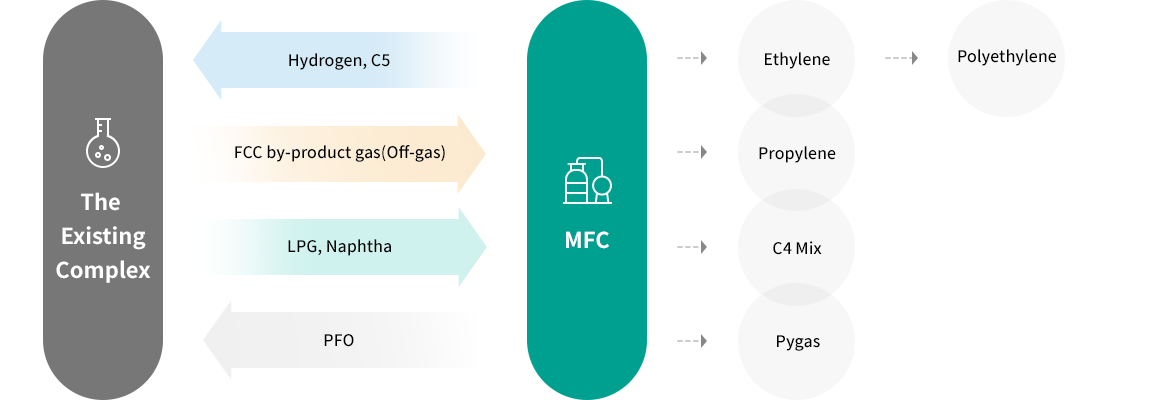
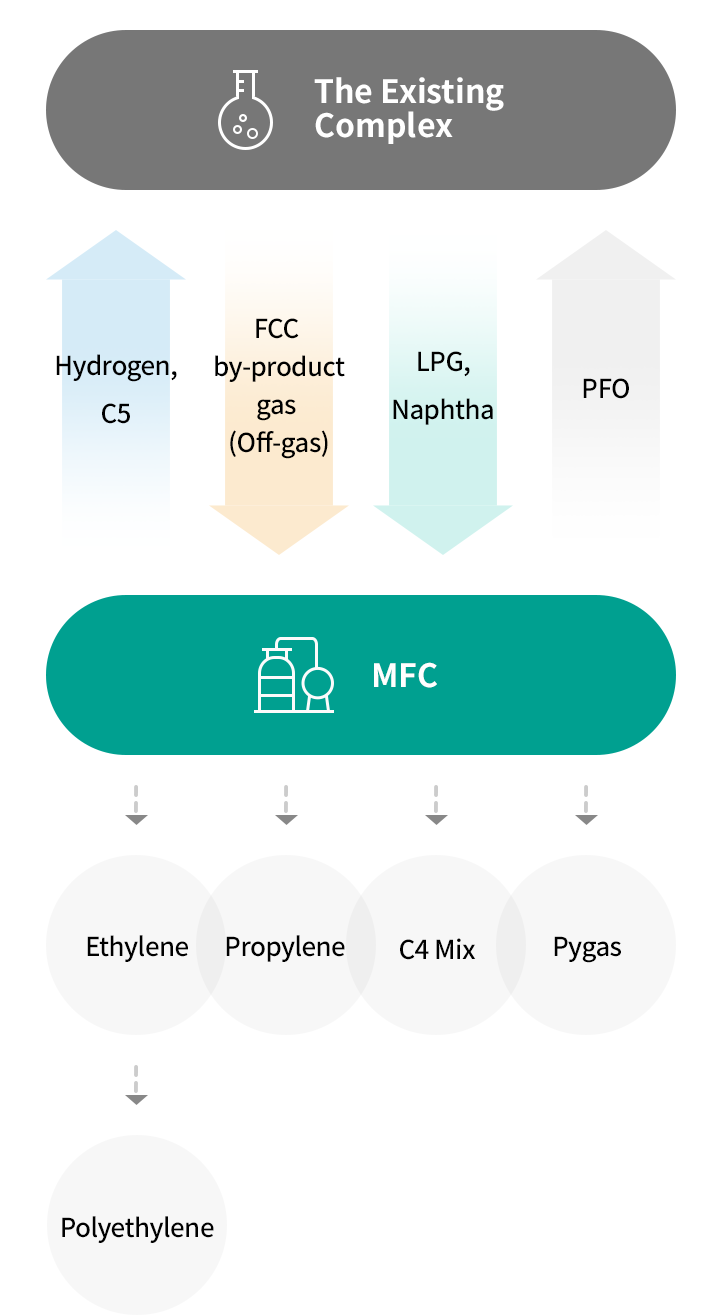
- Secures refinery byproducts previously sourced externally
- Utilizes off-gases as feedstock
- Enables optimized naphtha selection for the MFC while ensuring supply and price stability