
Principles of SHE Management
- 01
- We will voluntarily follow and carry out SHE-related laws and regulations.
- 02
- We will prevent accidents in the workplace through safety measures and establish a collective/cooperative culture of safety.
- 03
- We will continue improving the working environment and offer healthcare activities to promote a healthy life for stakeholders in and outside the company.
- 04
- We will contribute to the local community and worldwide conservation efforts through activities to reduce emission of pollutants and GHG and the development of environmentally friendly products.
- 05
- We will make our SHE results public to stakeholders in Korea and abroad in a transparent manner.
SHE Management System
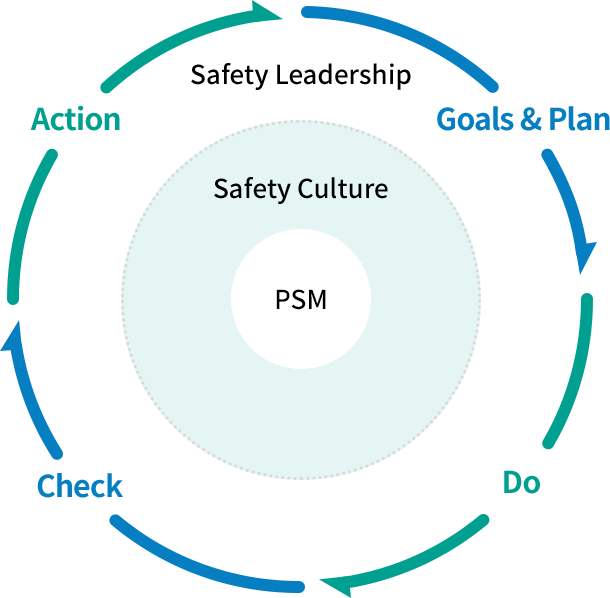
Safety culture and process safety management (PSM) are taking root at GS Caltex based on our CSEO’s staunch commitment to
SHE management policies and actions.
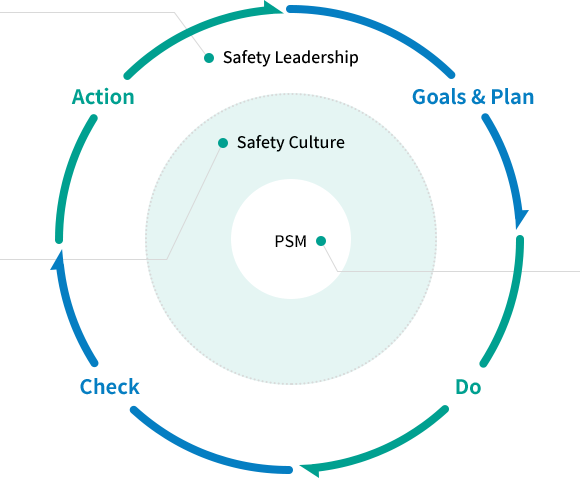
- CSEO’s Commitment
- Safety is the key to sustainable growth. Safety and trust are crucial for increasing profitability.
- Establishment of Safety Culture
- Safety Culture Transformation Program
- Internalization of Process Safety Management (PSM)
- People Education and training, incident investigation, partner management
- Facilities/ Equipment Maintenance inspection, safety inspection before operations
- System Process safety information, safe operation instruction procedures, safe work permit procedures, process risk analysis , and management of change (MOC), internal audit
- Emergency Response Stronger emergency response capabilities
Environment Management
Air Pollution Reduction
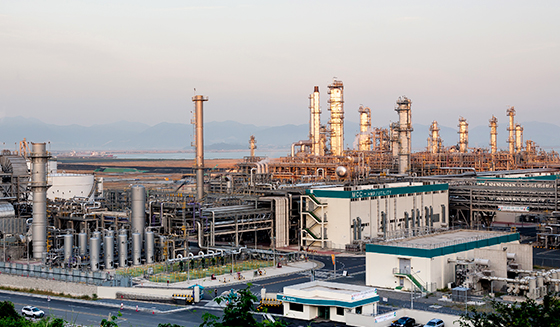
Recognizing air quality protection as a core environmental responsibility, GS Caltex systematically manages and reduces air pollutants generated at our sites. To help minimize dust, sulfur oxides (SOx), and nitrogen oxides (NOx), which are associated with fine particulate matter, we use liquefied natural gas (LNG), a cleaner-burning fuel, as the primary energy source for our operations. We also operate a Leak Detection and Repair (LDAR) system continuously across all our business sites to prevent emissions of volatile organic compounds (VOCs). In addition, we have established a real-time monitoring through the Tele Monitoring System (TMS) and continue to invest in the air pollution control facilities listed below to help ensure cleaner air for local communities.
Ultra Low NOx Burner
Selective Catalytic Reduction
Wet Gas Scrubber
Electrostatic Precipitators (EP), Scrubbers, Regenerative Thermal Oxidizers (RTO), Vapor Recovery Units (VRU), and other facilities
Tele Monitoring System (TMS)
Air Pollutant Emissions (2025)
Nitrogen Oxides (NOx): 3,080.68 tons / Sulfur Oxides (SOx): 348.40 tons
Carbon Monoxide (CO): 77.40 tons / Volatile Organic Compounds (VOCs): 61.82 tons
Reduction of Water Pollution
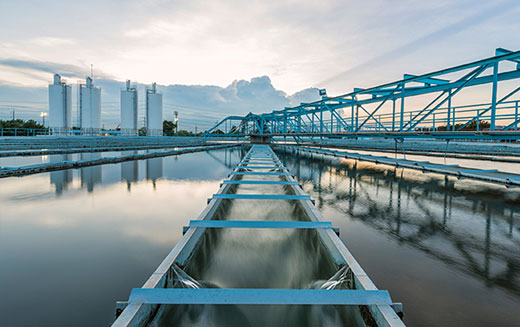
GS Caltex applies higher standards than required by law to treat wastewater generated in our worksites before discharge. We also manage wastewater produced during our production process on a daily basis through our monitoring system for wastewater sources. The wastewater is reused in our processing facilities, and we are pursuing other ways to recycle wastewater.
We reuse wastewater produced during the process for the de-alkalization facilities. Since 2018, we have reused the wastewater in our kerosene and diesel refinery and improved the total recycling rate to 17.7%.
Water recycling rate(2025) : 7.20%
Water Pollutant Emissions(2023)
Biochemical Oxygen Demand(BOD) : 232tons

Chemical Management
Our CMP (chemical management portal) ensures that all chemical substances produced or purchased by GS Caltex will be reviewed by our experts before they are introduced to our work process.
We make every effort to verify the components and hazardousness of chemical substance as well as confirm that applicable rules and regulations are being followed so that employees, partners, customers, and all those who treat the chemical substance can do so safely. To that end, we are continually operating and improving on the following aspects of CMP.
Periodic confirmation of substance components hazardousness
Systemization of chemical substance licensing management
Strengthening of standards for pre-purchase suitability assessment
Compliance with standards for facilities and treatment of chemical substances
Waste Materials Management
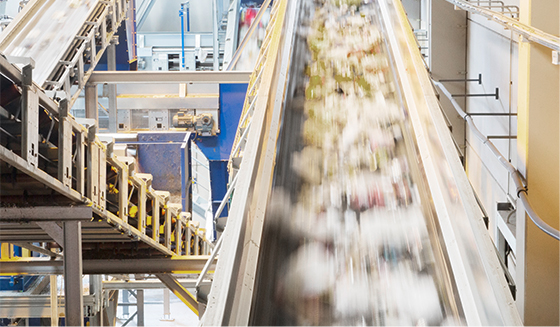
GS Caltex is dedicated to reducing waste materials, maximizing their reuse, and treating waste materials safely during storage, transportation, and processing. Within GS Caltex, our waste materials are categorized by type and stored separately. Onsite departments manage their own production of waste materials to encourage reduction. Outside of the company, we share information about hazardousness, etc. with the companies that dispose of our waste materials to further promote safe and environmentally friendly disposal. Furthermore, we are working on ways to recycle waste materials and searching for recycling companies to maximize the reuse of waste materials.
Waste material recycling rate(2025) : 82.12%
Soil Contamination Prevention
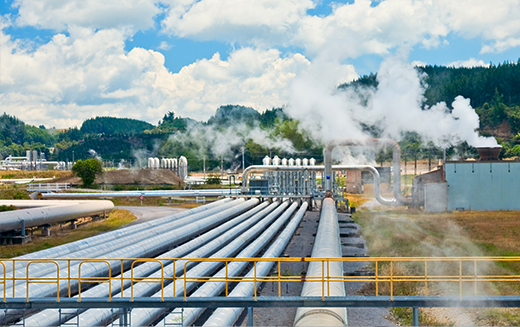
GS Caltex operates clean gas stations equipped with double-wall storage tanks, double-containment piping systems, oil overflow prevention facilities, and other leak and spill prevention facilities to help prevent soil contamination.
At our production plants, we relocated underground oil pipelines above ground and installed groundwater monitoring wells to continuously monitor soil and groundwater contamination as part of our ongoing efforts to protect the soil environment.
Investment in the environment : KRW 34.7billion(2023)

Development of Low Carbon Products
GS Caltex is pushing ahead in the development of clean and energy-efficient, Low Carbon products. We produce 2,3-BDO, found in plants and fermented foods. The 2,3-BDO that we produce using biomass and microorganisms is non-toxic and highly moisturizing. Currently used as an ingredient in cosmetics, we are researching and developing more applications for the organic compound as a food additive, pharmaceutical additive, etc. We also produce biodiesel made from vegetable oil mixed with motor diesel.